Thymosin alpha-1 has a wider clinical history
The protein building blocks in thymosin alpha-1 form a short chain — a peptide. Its man-made version is called thymalfasin. Researchers study how it affects immune cells, but exactly how it works in people is still unsettled.
The phrase “better immunity” skips the useful part. Better at what, for whom? A change in an immune message doesn’t tell us whether a person gets fewer symptoms or recovers from an illness.
Thymosin alpha-1 is not FDA-approved in the U.S. In its 2024 review, FDA found too little evidence for the uses it checked. That’s a limit on what those studies showed, rather than proof that the peptide could never help.
KPV brings the gut lining into view
KPV has just three building blocks: lysine, proline and valine. Its name uses their letter codes. The chain matches the end of a natural hormone; sharing that fragment doesn’t establish what KPV does for a person.
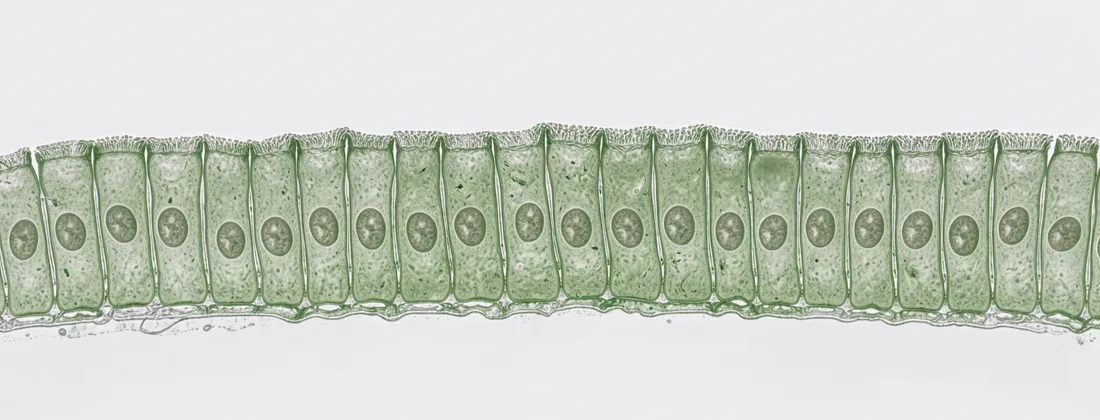
In gut-lining cells grown in a dish, KPV reduced signals involved in inflammation. A transport protein helped it enter the cells; the paper also studied bowel inflammation in mice. Human cells in a dish are still a long way from treating a human gut.
FDA’s review found no human studies showing benefit. It also found KPV’s exact targets uncertain. A way into a cell isn’t necessarily the same thing as the target it acts on.
A shared theme does not make a pair
These compounds share a topic here, not a tested treatment plan. Their places on the page don’t supply evidence that they work together.
For a bowel question, I look for a bowel outcome in people. For an infection question, I look for people with that infection. It’s a simple filing rule, but it saves a lot of hopeful guesswork.
Safety belongs beside the mechanism
Thymosin alpha-1 studies have reported soreness, redness and irritation at the injection site. FDA also raises concerns about ingredient quality and unwanted immune reactions. Findings from supervised studies don’t establish the safety of an unapproved preparation.
KPV is not FDA-approved, and its side effects in people are unknown. FDA says there isn’t enough information to rule out immune reactions or other risks. “Small peptide” tells you about its size, not its safety.